Today, Red Bull is one of the most recognizable beverage brands in the world. It sells billions of cans each year, sponsors Formula 1 teams, owns professional soccer clubs, and has become almost synonymous with energy drinks.
But when it first launched, the idea sounded questionable at best.
The drink came in a small can instead of a traditional soda bottle. It cost more than soft drinks. Its flavor was unlike anything most consumers had tasted. And perhaps most importantly, there wasn't even an energy drink category for people to buy into.
The company had to convince people they wanted something they had never considered purchasing before.
The story began in 1982 when Austrian marketing executive Dietrich Mateschitz traveled to Thailand for business. While there, he discovered a sweet, caffeinated drink called Krating Daeng, created by entrepreneur Chaleo Yoovidhya. Local workers and truck drivers drank it for an energy boost, and Mateschitz found that it helped with his jet lag.
He immediately saw an opportunity.
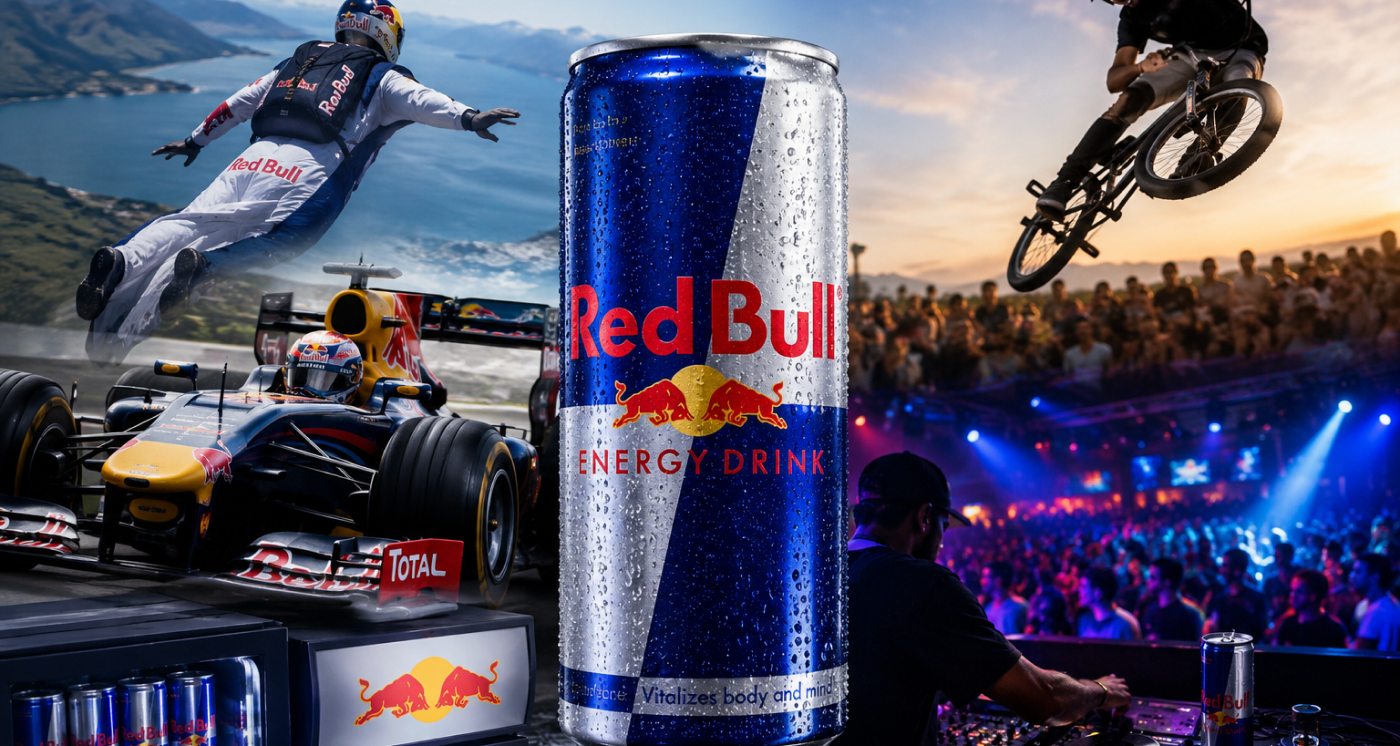
Mateschitz partnered with Yoovidhya to adapt the drink for Western consumers. They carbonated it, tweaked the flavor, packaged it in the now-famous slim silver-and-blue can, and gave it a new name: Red Bull.
The company launched in Austria in 1987.
Early success was anything but guaranteed. Retailers weren't convinced shoppers would pay a premium price for an unfamiliar drink that tasted nothing like cola. Consumers had no frame of reference for what an "energy drink" even was.
Instead of competing directly with Coke or Pepsi, Red Bull slowly carved out its own niche. As the brand spread across Europe and eventually reached the United States in the late 1990s, it faced the same challenge in every new market: introducing an entirely new product category.
But instead of traditional advertising, Red Bull focused on getting cans into people's hands.
The company hired college students to serve as brand ambassadors, driving around campuses in tiny Red Bull-branded cars loaded with free samples. Students handed out cans before exams, at sporting events, and outside libraries. Rather than waiting for customers to discover the product on a grocery shelf, Red Bull brought the product directly to the people most likely to appreciate it.
The company also targeted bartenders, DJs, nightclub staff, athletes, and event organizers. Long before the term "influencer marketing" became popular, Red Bull understood that if trendsetters embraced the drink, everyone else would eventually notice.
Its sponsorship strategy followed the same philosophy.
Instead of paying for traditional celebrity endorsements, Red Bull associated itself with activities that reflected the feeling it wanted customers to experience: motocross, snowboarding, cliff diving, BMX, Formula 1, air races, and countless other extreme sports. In 2012, Felix Baumgartner's record-breaking space jump, sponsored by Red Bull, became one of the most watched live events in YouTube history and perfectly captured the adventurous image the company had spent years building.
The product became more than just a drink. It became part of a lifestyle.
Perhaps the smartest decision of all was pricing.
Rather than trying to undercut competitors, Red Bull positioned itself as something different. The higher price reinforced the idea that this wasn't just another soda—it was a premium product with a specific purpose.
Today, nearly every major beverage company sells an energy drink. But Red Bull had a significant head start because it didn't spend its early years fighting over shelf space in an existing category.
It created the category.
That's a lesson every salesperson can appreciate. Competing against established products is difficult. Creating a new way for customers to think about a problem is much harder—but if you succeed, you often stop competing on everyone else's terms.
Through its clever approach, Red Bull convinced millions of people they needed one before they even knew energy drinks existed.