By the time George Foreman put his name on a countertop grill, he had already lived several lives.
Born in Texas in 1949, Foreman overcame a troubled childhood to become an Olympic gold medalist and heavyweight champion. He famously lost his title to Muhammad Ali in the 1974 "Rumble in the Jungle," retired from boxing a few years later, became a minister, and then launched an improbable comeback in his late 30s.
By then, Foreman's public image had completely changed. The intimidating young fighter had become a funny, cheerful, self-deprecating middle-aged guy who openly talked about his love of food. In 1994, at age 45, he knocked out Michael Moorer to become heavyweight champion again.
That reinvention would soon make him a fortune outside the ring.
The grill began with inventor Michael Boehm, who developed a small electric appliance that cooked food from both sides at once. Its cooking surfaces were angled so grease would run away from the food and into a plastic tray.
Appliance company Salton acquired the product and needed someone to sell it.
Foreman's name came up through his business team, and the match made sense. He was famous, likable, constantly talking about food, and had become associated with getting healthier later in life.
Foreman initially needed convincing. According to accounts he later gave, a grill sat unopened at his house for months before his wife eventually tried it. Foreman liked the hamburgers it produced and, more importantly, noticed the grease that had collected in the tray.
He was sold.
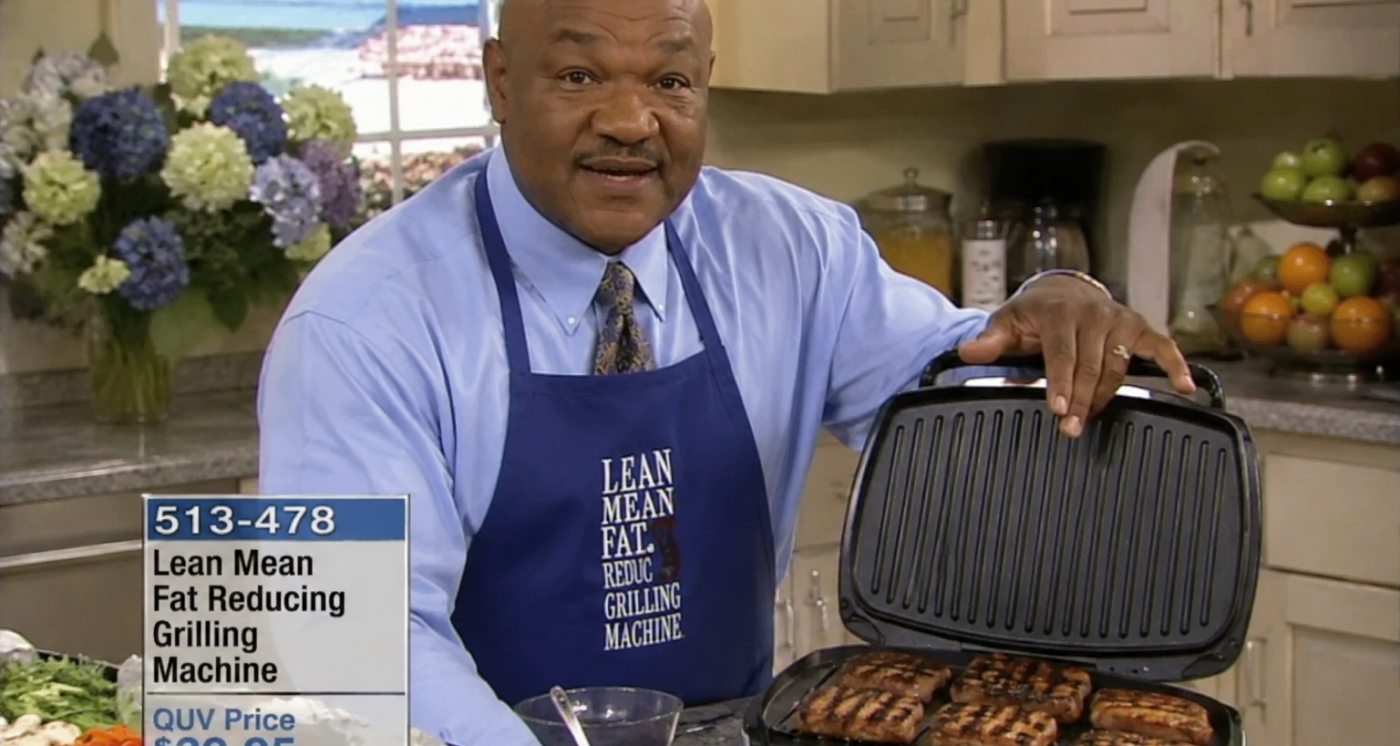
The George Foreman Lean Mean Fat-Reducing Grilling Machine arrived in the mid-1990s, and Foreman became its enthusiastic salesman.
That was crucial. Celebrity endorsements were nothing new, but Foreman seemed unusually suited to the product. Watching a former heavyweight champion cook a hamburger while happily pointing to the fat dripping into a tray made the pitch instantly understandable.
There was no complicated explanation required. The grill cooked quickly, required little effort and appeared to make familiar foods healthier.
Foreman also had the personality for infomercials and television appearances. He joked, smiled and talked about the grill like something he genuinely kept in his own kitchen. His enthusiasm became part of the product.
Sales started slowly before taking off. Salton expanded the line into different sizes and models, while Foreman continued promoting it. The grill became particularly popular with people who wanted an easy way to cook indoors, including college students and apartment dwellers.
Eventually, more than 100 million George Foreman Grills were sold worldwide.
Foreman's compensation made the story even better.
His deal reportedly gave him roughly 40 percent of the profits associated with the grill rather than simply paying him a standard celebrity endorsement fee. As sales soared, his checks became enormous. Foreman later recalled receiving as much as several million dollars a month at the product's peak.
In 1999, Salton bought out Foreman's future rights to use his name for a reported $137.5 million in cash and stock.
Estimates vary, but Foreman ultimately earned considerably more from his relationship with the grill than he did during his legendary boxing career.
It became one of the great celebrity endorsement deals in business history, powered by an unusually perfect combination of product and pitchman.
George Foreman knew how to sell the grill because consumers immediately believed he would use one himself.