For a brief period in the early 2010s, Groupon looked like it might become one of the biggest companies on the internet.
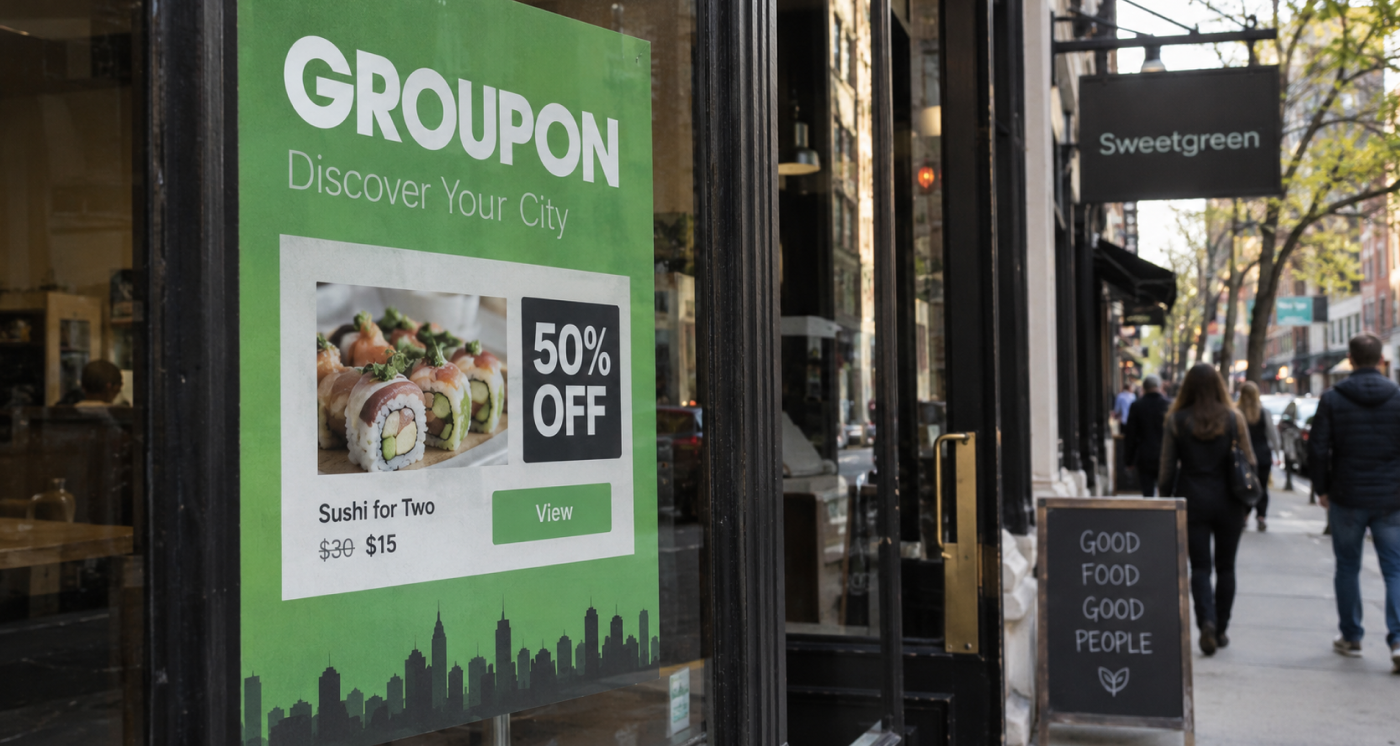
The idea worked like this: local businesses offered huge discounts, Groupon emailed those deals to millions of people, and the two sides split the money.
Customers got cheap massages, restaurant meals, yoga classes, and teeth whitening. Small businesses got a flood of new customers. Groupon took a cut every time somebody bought.
The company grew at a speed that was almost unheard of at the time.
Groupon began in Chicago in 2008 as an offshoot of a struggling website called The Point, founded by Andrew Mason. Its first deal was a two-for-one pizza offer at a bar downstairs from its office. Twenty-four people bought it.
Soon, Groupon began expanding into other cities. By early 2011, it had 83 million subscribers across 43 countries and had sold more than 70 million Groupons. Revenue exploded from $14.5 million in 2009 to $1.6 billion in 2011.
Behind that growth was a massive sales operation. In Groupon's earliest days, its small team reportedly made around 100 calls per person per day trying to convince local businesses to run deals. As Groupon expanded, it hired salespeople at an astonishing pace. The company went from just 128 sales reps in March 2010 to more than 5,000 by the end of 2011.
The pitch to merchants was compelling. Instead of paying upfront for an advertisement and hoping someone saw it, businesses could offer a Groupon and potentially get hundreds of paying customers through the door. Demand became so intense that Groupon sometimes had months-long backlogs of businesses waiting to be featured.
Investors went crazy for it too. In 2010, Google reportedly offered as much as $6 billion to acquire Groupon. The company turned it down. The following year, Groupon went public at $20 per share, raising roughly $805 million before expenses.
But the problems became harder to ignore. For merchants, a Groupon could generate an enormous rush of customers, but those customers were arriving with steep discounts. Groupon also kept a portion of the sale. That meant businesses could find themselves serving huge numbers of people at painfully thin margins, hoping those bargain hunters eventually returned and paid full price.
The model was also extremely labor-intensive. Groupon needed thousands of salespeople constantly recruiting local businesses and filling its pipeline with fresh deals. Competitors could offer essentially the same service, and hundreds of daily-deal sites appeared.
Consumers eventually became less excited too. Inboxes filled with offers, merchants found other ways to reach customers online, and the novelty of buying a discounted voucher today for something you might use months later wore off.
Groupon tried expanding into merchandise, travel and other forms of local commerce. Mason was fired as CEO in 2013, less than two years after the IPO. The company survived, but the vision of Groupon becoming a dominant gateway to local commerce never materialized.
For salespeople, Groupon's story is a useful reminder of what explosive sales growth can hide. A giant sales force can put an offer in front of practically everyone. A great pitch can get customers to try something once. The harder part is making sure both sides still want the deal after the promotion ends.