Imagine paying $1 million for the right to drive a taxi.
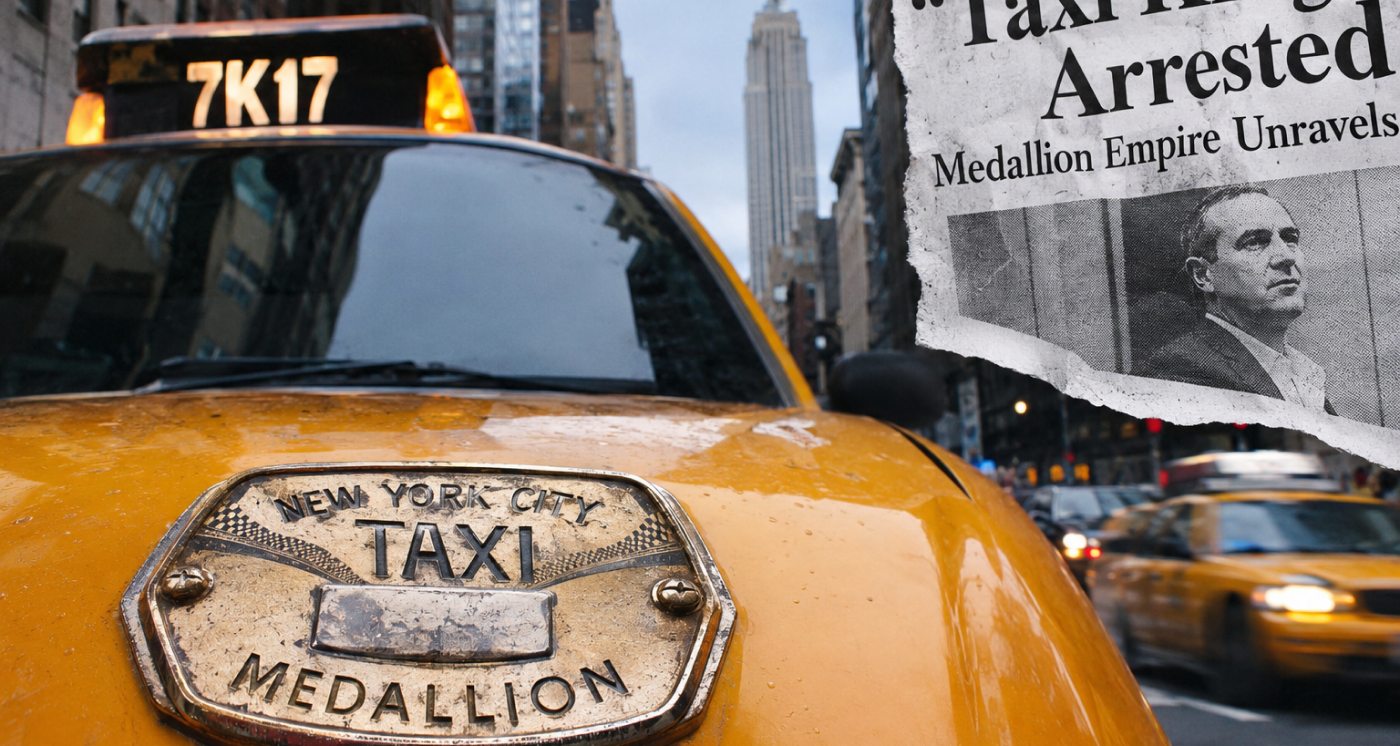
Not for the car itself, which you'd still have to buy, insure, and maintain. Just for the little metal plate attached to its hood.
For years, that's exactly what happened in New York City, where taxi medallions became one of the strangest speculative investments in American history. The market created millionaires, enriched brokers and lenders, and eventually left thousands of drivers financially devastated.
The story begins in 1937, when New York introduced a system limiting the number of licensed taxis. Each authorized cab needed a medallion, which gave its owner the exclusive right to pick up passengers hailing taxis on the street.
Because the city tightly controlled the supply, medallions became valuable assets that could be bought, sold, leased, and used as collateral for loans.
By 2002, a medallion cost approximately $200,000. Twelve years later, prices had climbed past $1 million.
An entire sales industry developed around the market. Brokers connected buyers and sellers, lenders financed purchases, and fleet owners accumulated hundreds of medallions. Many buyers were immigrant drivers who viewed ownership as a path to financial independence and a comfortable retirement.
But the economics were increasingly questionable.
According to a Pulitzer Prize-winning New York Times investigation, some brokers and lenders pushed drivers into enormous loans with unfavorable terms, collecting commissions, fees, and interest along the way. Some borrowers signed documents they barely understood.
One driver who purchased a $1 million medallion discovered that fees and interest would bring his total repayment obligation to more than $1.7 million.
Meanwhile, some industry insiders were actively helping inflate prices.
One of the most notorious was Evgeny Freidman, a flamboyant fleet operator nicknamed the "Taxi King."
At a 2006 city auction, Freidman and his associates paid approximately $477,000 apiece for 54 medallions, substantially more than the prevailing market price. He later publicly acknowledged deliberately overbidding to establish higher valuations for medallions he already owned.
The strategy helped him secure larger loans and expand his empire.
At its height, Freidman's fleet operated approximately 900 taxis. He owned luxury properties, drove a Ferrari, and cultivated a reputation as one of the city's most powerful taxi operators.
Then everything collapsed.
Uber entered New York in 2011, followed by Lyft in 2014. Suddenly, passengers had alternatives to traditional yellow cabs, and medallion values began plummeting.
But ride-sharing wasn't the entire explanation. The market had already become dangerously inflated, with drivers borrowing far more than their earnings could reasonably support.
By November 2019, the average medallion was worth approximately $165,000, an astonishing decline from its peak.
Freidman's empire also unraveled. In 2017, he was arrested on charges involving millions of dollars in taxi surcharges that his companies had collected but failed to remit to the government. He pleaded guilty to felony tax fraud in 2018 and was subsequently sentenced to five years on probation. He also agreed to leave the taxi industry.
The broader fallout was enormous. Several credit unions heavily exposed to medallion loans collapsed, and hundreds of owners filed for bankruptcy.
In 2020, New York's attorney general announced plans to sue the city for $810 million, alleging that officials had knowingly promoted inflated medallion prices and misled buyers.
The city eventually introduced a debt-relief program to help struggling owners restructure their loans. For many drivers, however, the damage was already done. Years of savings had disappeared, and the assets they had been sold as a ticket to financial security had become financial burdens.
The lesson was painfully familiar: when an industry makes more money selling an opportunity than its customers can realistically earn from it, somebody is eventually going to be left holding the bag.