You've probably been there.
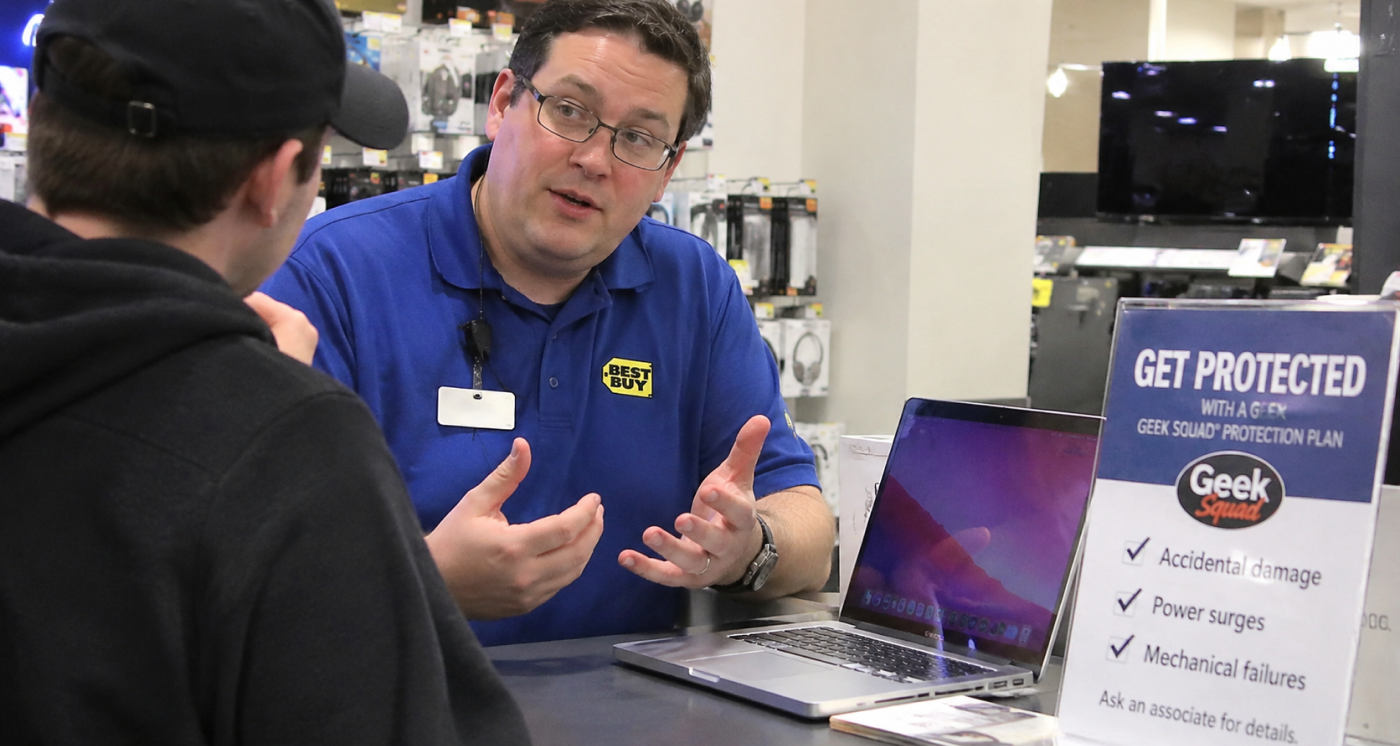
You spend $1,200 on a new laptop, and just as you're about to pay, the salesperson asks whether you'd like to spend another $199 to protect it.
You decline.
“Are you sure? Because if something happens to it after the manufacturer's warranty expires, you're on your own.”
Suddenly, you're wondering whether the $1,200 you just spent was a terrible idea.
Welcome to the extended warranty business, one of retail's most enduring and profitable sales opportunities.
Extended warranties have been around for decades, with roots in the service contracts offered by automobile dealers and appliance retailers during the mid-20th century. As consumer electronics became more expensive and complicated, retailers found a lucrative opportunity in selling protection against future repairs.
Today, extended warranties cover everything from refrigerators and televisions to smartphones, furniture, and automobiles. And while customers may think they're buying peace of mind, retailers are also selling a product with unusually attractive economics.
By the 1970s, extended warranties had become an established business for appliance retailers. By the early 1990s, industry estimates put annual sales in the billions. According to Consumer Reports, the U.S. extended warranty market was worth nearly $50 billion in 2019.
The appeal to retailers is obvious. A store might earn a relatively modest profit selling a television, then collect additional revenue by attaching a protection plan. Often, a third-party company handles the actual repairs and assumes the financial risk.
Best Buy, for example, has disclosed that it earns commissions on certain protection plans sold on behalf of outside underwriters. It can also receive profit-sharing payments when those plans perform well financially.
For salespeople, warranties offer the opportunity to increase the size of a transaction without having to find another customer. And the sales pitch is remarkably simple: You've just spent a significant amount of money. Wouldn't you spend a little more to make sure you don't lose it?
But are extended warranties actually worth buying? Consumer Reports has generally advised against them, arguing that most consumers are better off saving the money for potential repairs. Many products never need covered repairs during the contract period, and even when something breaks, the cost of fixing it may be less than the warranty itself.
There's also the fine print. Some plans exclude accidental damage, normal wear and tear, or particular components. Others charge deductibles, restrict where repairs can be performed, or overlap with the manufacturer's existing warranty. The Federal Trade Commission specifically warns consumers to check for these limitations before buying.
Still, extended warranties aren't universally bad purchases. Coverage for an expensive, failure-prone product can make sense, especially when a major repair would create a financial hardship. Accidental-damage protection may also offer benefits that an ordinary manufacturer's warranty doesn't.
The problem is that consumers often make the decision without knowing how likely the product is to break. The seller, meanwhile, gets paid whether it breaks or not.
And that may explain why extended warranties have survived nearly every transformation in retail, from department stores and shopping malls to e-commerce and subscription-based protection plans.
As long as people are willing to spend money on expensive things, there will be someone standing nearby asking whether they'd like to spend a little more to protect them.