Today, earning a Michelin star can transform a restaurant overnight. Chefs spend entire careers trying to earn one, and losing a star can make international news.
But the strange part is that Michelin never set out to become the world's most influential restaurant critic. It actually just wanted to sell more tires.
Brothers André and Édouard Michelin founded the Michelin tire company in France in 1889, when automobiles were still a novelty. There were fewer than 3,000 cars in the entire country, which presented an obvious problem for a company whose future depended on people driving.
The brothers figured that if they could encourage people to travel more, those people would eventually need more tires.
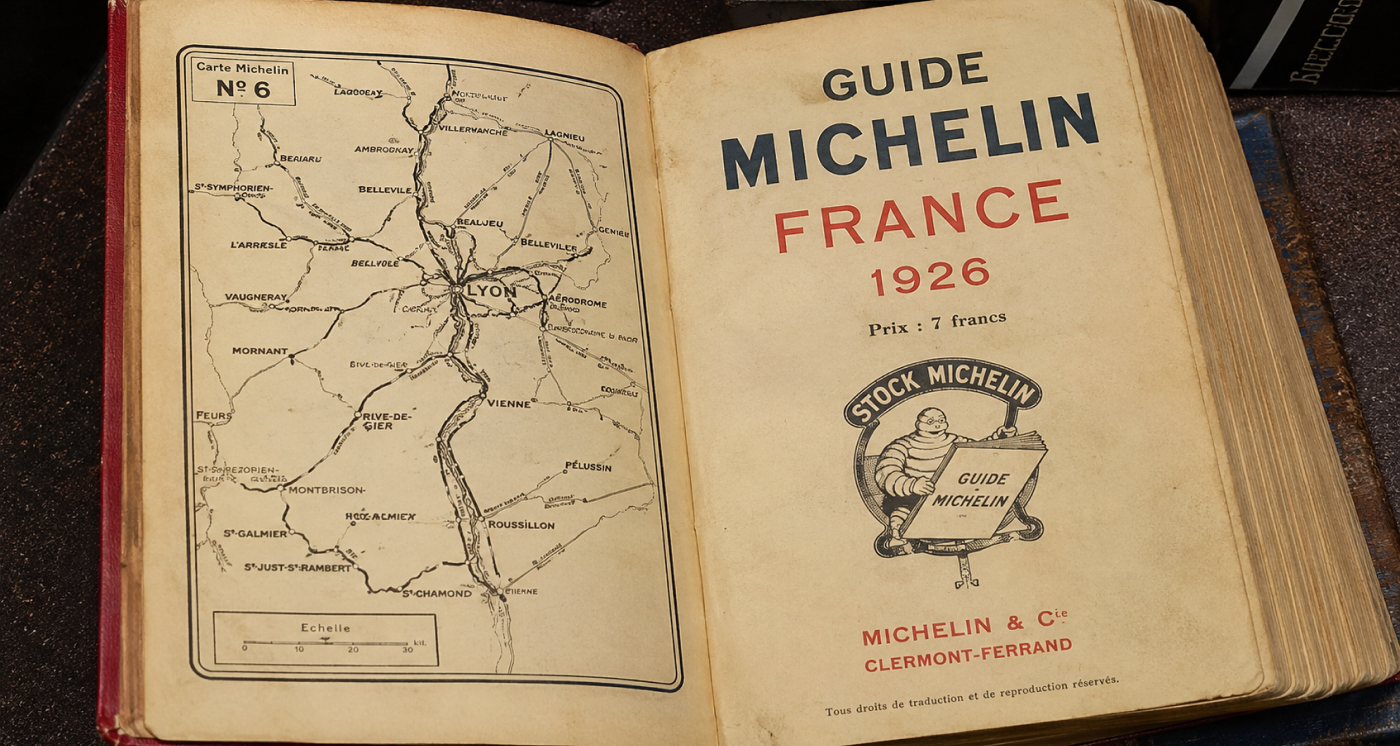
So in 1900, Michelin printed 35,000 copies of a free guide for French motorists. The 400-page book contained maps, instructions for changing tires, locations of gas stations and mechanics, and recommendations for hotels and restaurants.Everything in it made driving a little easier. And every additional trip meant more miles on Michelin's potential customers' tires.
The idea caught on, and Michelin soon began producing guides for other countries, starting with Belgium in 1904, and eventually expanded throughout Europe. For the first 20 years, the guides were given away.
According to Michelin, that changed after André visited a tire shop and discovered copies of his guide being used to prop up a workbench. He concluded that people valued things more when they paid for them. In 1920, Michelin began charging seven francs for the guide. The company also removed paid advertisements, helping establish the publication as an independent source of information.
Meanwhile, one section was becoming particularly popular: restaurants. Michelin began sending anonymous diners to evaluate establishments. In 1926, the company introduced its first restaurant star, awarded to especially good places to eat. Five years later, Michelin expanded the system to the familiar one-, two-, and three-star hierarchy.
In 1936, Michelin published definitions that made the original connection to driving especially clear.
One star meant a restaurant was worth a stop. Two meant it was worth a detour. And three meant it was worth making a special journey.
In other words, even Michelin's highest culinary honor encouraged people to get in their cars.
Over the decades, the guide developed a reputation for unusually rigorous and secretive reviews. Michelin inspectors became full-time employees who visited restaurants anonymously, and the company's ratings gradually became among the most coveted awards in the restaurant business.
More than a century after the first guide appeared, Michelin stars are recognized around the world. The guide has expanded far beyond France, and chefs routinely build their careers around winning and keeping its approval.
It also remains one of the greatest examples of sales promotion ever conceived.
Michelin created something genuinely useful for its customers and gave them a reason to use the product it actually sold more often. The content became so valuable that it eventually developed into a global institution of its own.
And it all started because two tire salesmen needed people to drive more.