Even great companies get it wrong.
Some of the biggest names in business have launched products they were convinced customers would love, only to watch them flop spectacularly. In many cases, the products themselves weren't terrible. But poor positioning, unrealistic expectations, confusing messaging, or simply bad timing turned ambitious launches into expensive lessons.
Here are seven of the most famous sales disasters in business history.
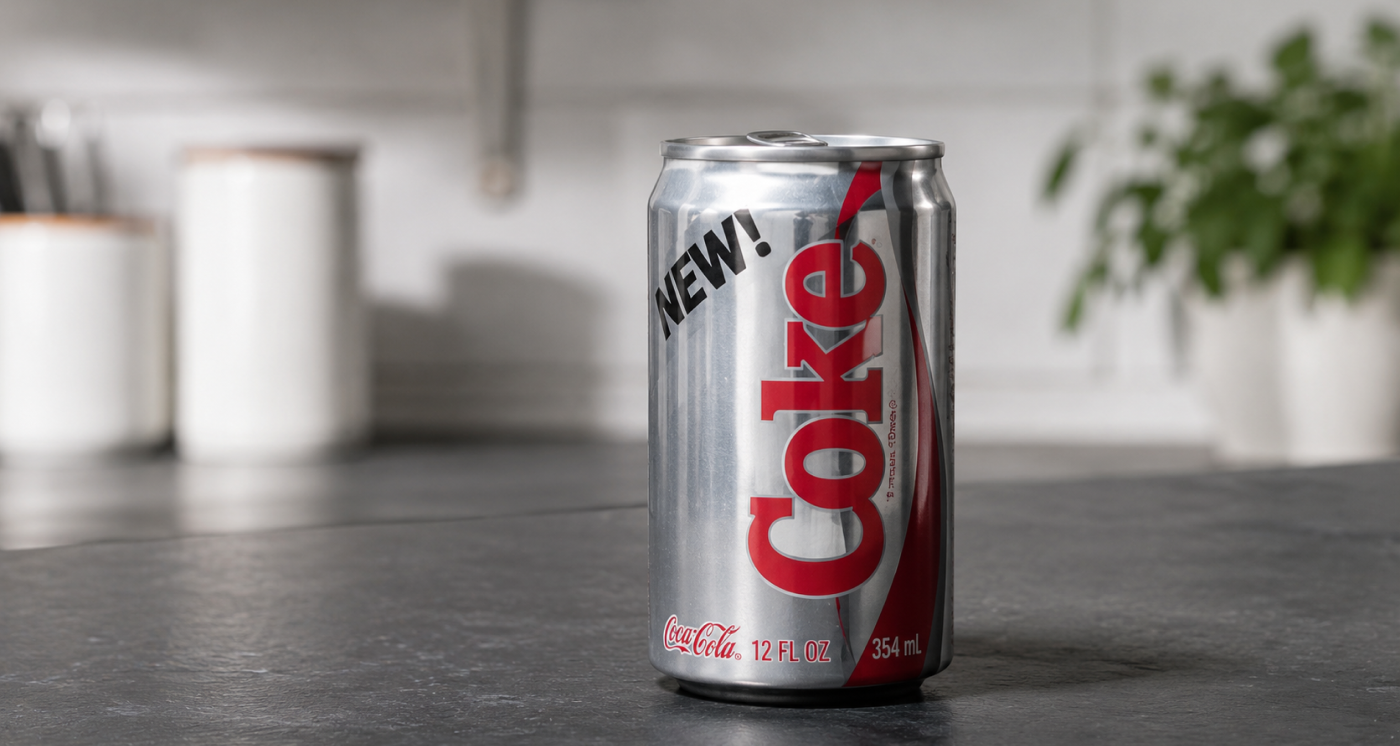
1. New Coke (1985)
By the early 1980s, Pepsi had been gaining market share through its famous "Pepsi Challenge" taste tests. Worried about falling behind, Coca-Cola reformulated its flagship drink and introduced New Coke.
The company believed consumers would embrace the sweeter taste.
Instead, customers revolted. Thousands flooded Coca-Cola with angry letters and phone calls. People stockpiled the original formula, and the backlash became national news.
Just 79 days after the launch, Coca-Cola announced the return of the original recipe as Coca-Cola Classic. Today, New Coke is remembered as one of the biggest marketing and sales miscalculations ever made.
2. The Ford Edsel (1957)
Ford expected the Edsel to become its next blockbuster automobile. The company spent years developing the car and invested the equivalent of billions of dollars in today's money before it reached dealerships.
Expectations were enormous.
Reality was not.
The styling divided consumers, quality problems hurt early reviews, and the car entered the market just as the U.S. economy weakened. Dealers struggled to move inventory, and Ford discontinued the Edsel after only a few years.
The Edsel's name has since become shorthand for an expensive business failure.
3. Crystal Pepsi (1992)
Pepsi wanted to capitalize on consumers' growing interest in healthier, more natural products.
Its answer was Crystal Pepsi—a clear cola that looked more like sparkling water than soda.
Curiosity generated strong initial sales, but repeat purchases quickly faded. Many customers expected a lemon-lime flavor because of the drink's appearance, then found themselves drinking something that tasted almost identical to regular cola.
The product disappeared from shelves within a couple of years, though periodic nostalgia-driven relaunches have followed.
4. Segway (2001)
Before anyone had ridden one, the Segway was surrounded by extraordinary hype.
Inventor Dean Kamen predicted it would change cities forever. Early media coverage suggested it would revolutionize transportation.
The reality was much more modest.
The machines were expensive, bulky, and impractical for most commuters. Instead of replacing walking or bicycles, Segways found their niche with tour companies, warehouses, airports, and security teams.
The expectations were enormous. The market simply wasn't.
5. Amazon Fire Phone (2014)
Amazon dominated online retail and had already found success with Kindle devices.
Smartphones seemed like a logical next step.
The Fire Phone included several unique features, including dynamic 3D effects and deep Amazon integration. But it launched into a market already dominated by Apple and Samsung while offering few compelling reasons for consumers to switch.
Sales were disappointing almost immediately. Amazon reportedly wrote off roughly $170 million related to the device, and the phone was discontinued about a year after launch.
6. Google Glass (2013)
Google Glass generated excitement before its release.
The wearable computer promised hands-free navigation, messaging, photography, and internet access through a tiny display mounted above one eye.
Early adopters loved the technology.
Much of the public didn't.
Privacy concerns exploded as people worried they were being recorded without consent. The $1,500 price tag also limited mainstream adoption, and Google eventually ended the consumer version of the product. The underlying technology later found a much better fit in industrial and medical settings, though these days, wearables are increasing in popularity.
7. DeLorean Motor Company (1981)
The stainless-steel DeLorean DMC-12 became one of the most recognizable movie cars in history after Back to the Future put it back on the map.
Unfortunately, that fame came after the company's collapse.
Production delays, quality concerns, high prices, and financial troubles made it difficult to attract enough buyers. The company's founder, John DeLorean, became embroiled in a highly publicized cocaine scandal that further damaged confidence.
Fewer than 10,000 cars were produced before the company went bankrupt.
Ironically, the DeLorean eventually became far more successful as a cultural icon than it ever was as a product.
Business history is full of ambitious launches that looked like sure things. These failures are a reminder that even companies with enormous budgets, famous brands, and talented sales teams can misjudge what customers actually want. Sometimes the hardest product in the world to sell is the one everyone inside the company is convinced will be a hit.