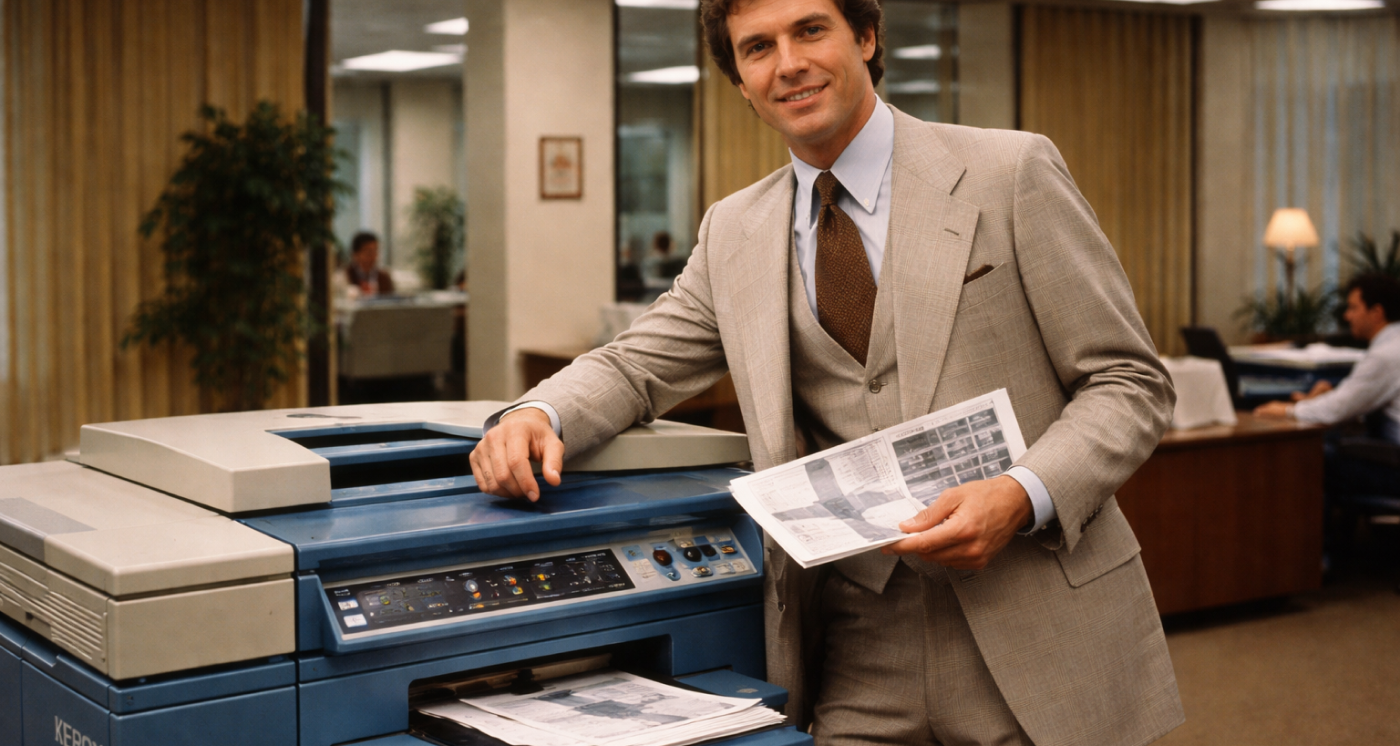
In the 1960s and 70s, selling copiers became one of the most competitive jobs in business.
Before that, copying meant carbon paper or messy mimeograph machines. Then Xerox changed everything. In 1959, Xerox introduced the 914, the first plain-paper photocopier. It was expensive—around $25,000 to buy—but Xerox structured it as a lease, with a monthly fee and a per-copy charge. That model shaped how the product was sold. Each deal carried ongoing value tied directly to usage, which made every account more important over time.
Xerox built a field sales force to match. Reps were assigned territories and expected to know every office in them—law firms, insurance agencies, manufacturers, government buildings. They walked floors, introduced themselves, asked how documents were handled, and looked for inefficiencies. The pitch often centered on time. How long it took to produce copies, how often it happened, and what that time cost. From there, the numbers were straightforward. Faster output, less manual work, more consistency.
The process took time. Deals could stretch for months. Reps worked their way through gatekeepers, built relationships with managers, and made the case to executives who controlled budgets. Follow-up was constant. Inside the company, performance was tracked closely, rankings were visible, and expectations were high (sound familiar?).
As the market grew, competition followed. IBM, Canon, and Ricoh introduced smaller and more affordable machines. Their products improved quickly, and accounts that once defaulted to Xerox started to evaluate options.
This caused sales conversations to become more detailed. Reps needed to understand competing offers, pricing structures, and service terms. Reliability, maintenance, and total cost now became part of the discussion. Service contracts carried weight because machines required ongoing upkeep, and service quality influenced whether accounts stayed or switched.
By the 1980s, copiers were a standard part of office infrastructure. Pricing pressure increased, and procurement teams became more involved in decisions.
The job itself remained demanding. Reps spent their days in the field, managing territories, prospecting, running demos, negotiating contracts, and maintaining relationships after the sale. There were no inbound leads or automated systems. Progress depended on coverage, persistence, and follow-through.
For many, copier sales became a training ground. The work required discipline—managing a pipeline, handling objections, and staying organized across long sales cycles. A number of future sales leaders came out of that environment.
Over time, competitors reduced Xerox’s early dominance and turned the category into a sustained contest across companies and regions. Through it all, the core of the role stayed the same: understanding how people worked, identifying friction, and persuading them to adopt a different way of doing it.