Long before LinkedIn, CRMs, and Starbucks gift cards, one company built one of the largest sales organizations the world had ever seen.
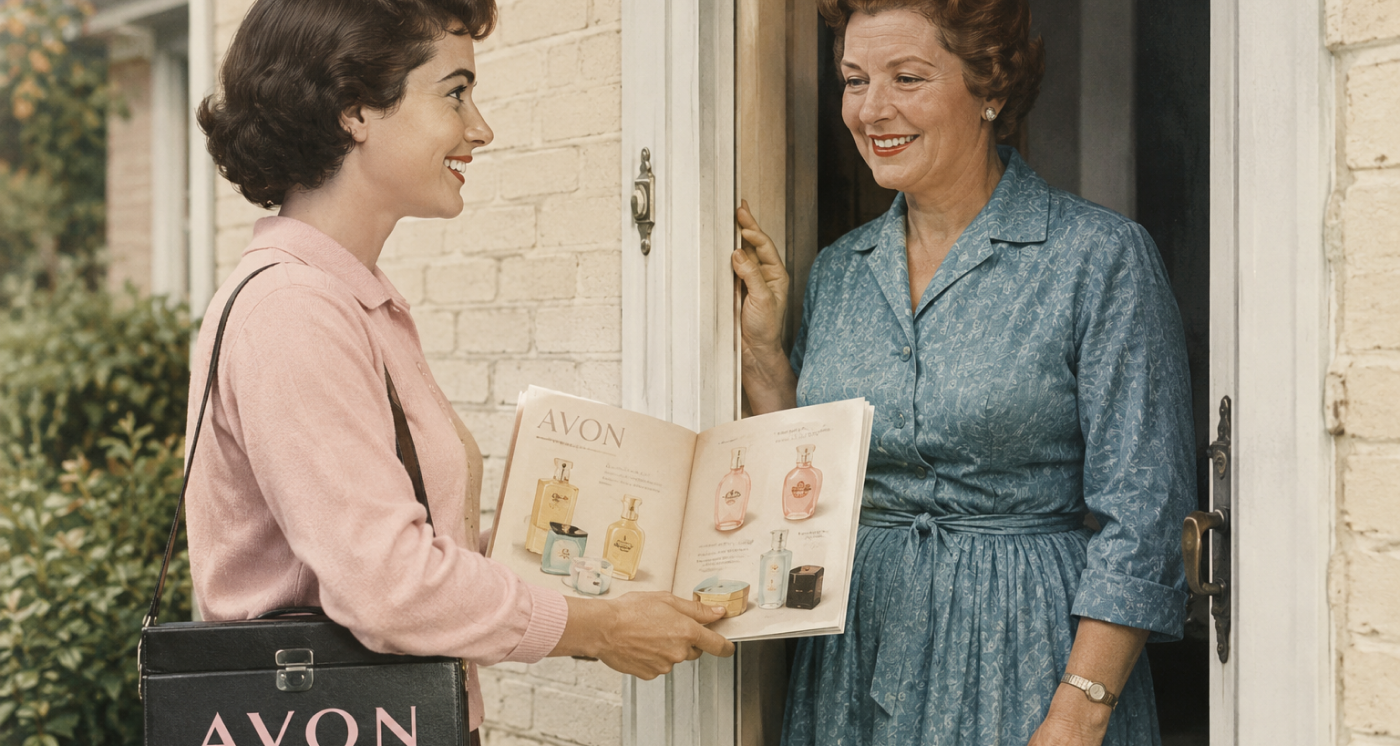
At its peak, Avon had more than six million (!!!) independent sales representatives operating in over 100 countries. They sold lipstick, perfume, and skincare products to friends, neighbors, coworkers, and complete strangers, often by knocking on their front doors.
For much of the twentieth century, "the Avon Lady" was one of the most recognizable salespeople in America.
The company's story began in 1886 with a traveling book salesman named David H. McConnell. While visiting customers, McConnell noticed something. The free perfume samples he handed out generated more excitement than the books he was trying to sell. He saw an opportunity and founded the California Perfume Company, building a business around direct sales of fragrances and cosmetics.
The idea was unusual for its time. Professional opportunities for women were limited, yet McConnell chose to recruit women as his sales force. His first representative, Persis Foster Eames Albee, was in her fifties when she joined the company. She became an extraordinary recruiter, helping build a growing network of representatives across the country. Many historians credit her as one of America's first female sales managers.
As the company expanded, so did its reputation. In 1939, the California Perfume Company adopted the name Avon, inspired by Stratford-upon-Avon, the English hometown of William Shakespeare. Over the following decades, the company experienced explosive growth.
For millions of women, Avon offered a chance to earn an income while working flexible hours. Representatives carried catalogs from house to house, demonstrated products in customers' living rooms, collected orders, and returned days later with deliveries. Many built businesses almost entirely through repeat customers and referrals, creating relationships that lasted for years.
The company's marketing became just as famous as its salespeople. "Ding Dong! Avon Calling!" became one of the most recognizable advertising slogans in America. By the 1960s and 1970s, chances were good that nearly every neighborhood had an Avon Lady.
The business continued growing around the world for decades. Avon expanded into more than 100 countries and eventually employed a sales force that numbered in the millions. Few companies have ever relied so heavily on person-to-person selling at such an enormous scale.
Eventually, however, the market changed. Department stores expanded their cosmetics departments. Specialty beauty chains offered customers thousands of products under one roof. Online shopping made it possible to order almost anything with a few clicks, reducing the appeal of waiting for a catalog order to arrive. As consumer habits evolved, Avon's traditional door-to-door model became increasingly difficult to sustain.
The company also faced serious internal challenges. During the 2010s, Avon spent years dealing with investigations into bribery allegations involving overseas operations. In 2014, it agreed to pay more than $135 million to settle charges brought by U.S. authorities related to violations of the Foreign Corrupt Practices Act. Leadership changes, activist investors, and declining sales added to the company's struggles.
In 2019, Brazilian cosmetics company Natura &Co acquired Avon, bringing one of the most recognizable names in direct selling under new ownership. While the business continues to operate in many countries, the era when Avon representatives regularly knocked on doors across America has largely passed.
Even so, Avon's influence on the sales profession is difficult to overstate. Decades before affiliate marketing, influencers, or social selling became buzzwords, millions of people built businesses by developing relationships, earning trust, and serving customers one conversation at a time. Few companies have shaped the history of direct sales more than Avon.